



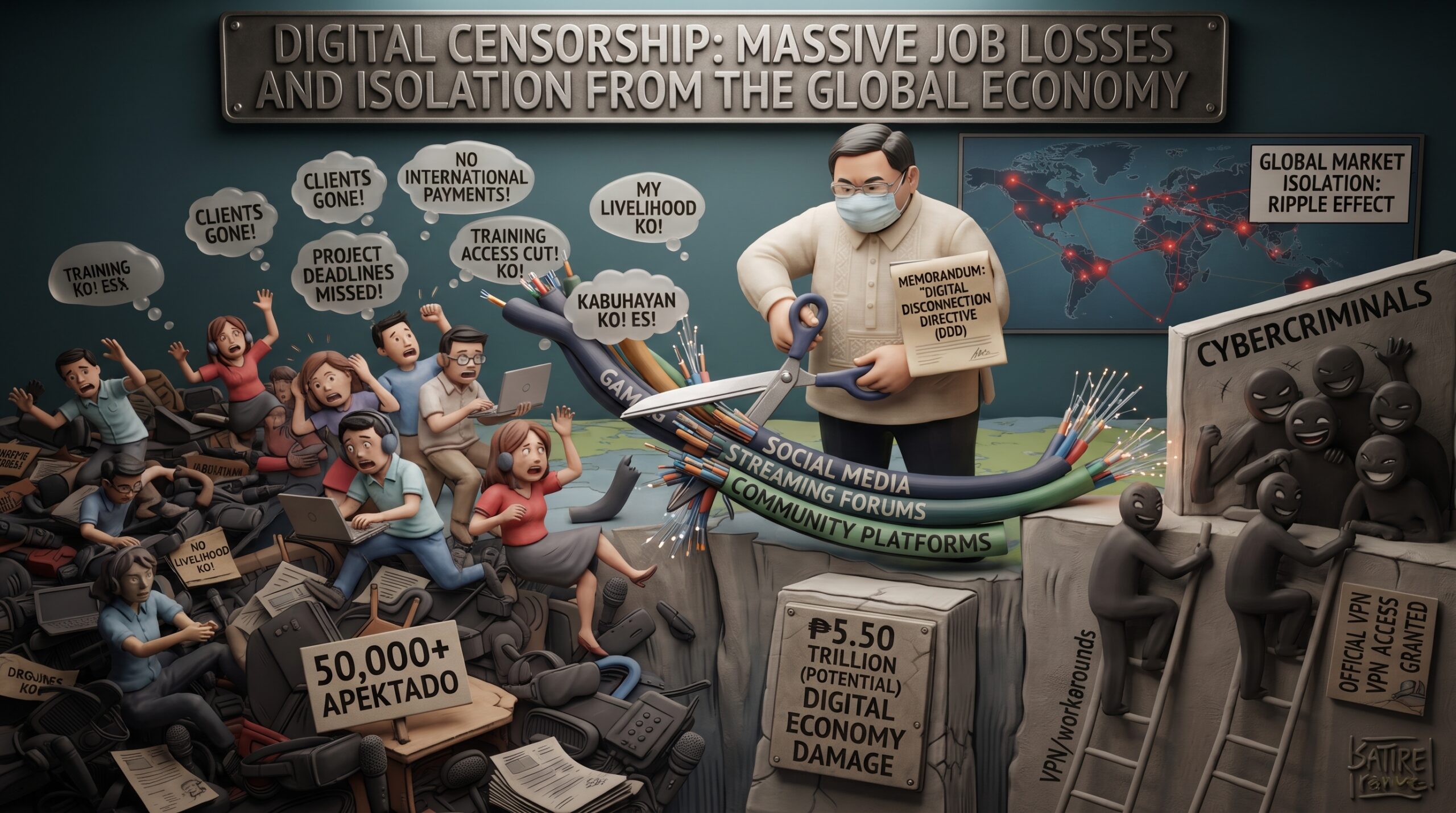
The Philippine digital economy sector has suffered a major blow following the government’s total block of the communication platform Discord, which abruptly cut off the livelihoods and communication lifelines of thousands of Filipino online freelancers and virtual assistants.
The Cybercrime Investigation and Coordinating Center (CICC) ordered the app’s blockage after Discord failed to adequately respond to a government directive requiring foreign tech platforms to establish a local office or appoint a resident agent in the Philippines. This mandate aims to hold tech platforms accountable for combating child sexual exploitation and online radicalization.
Unlike Reddit—which avoided a ban by engaging in dialogue and presenting a concrete compliance plan to the CICC—Discord merely submitted a list of its existing safeguards.
More Than Just Gaming, It Is a Virtual Office
According to former Department of Information and Communications Technology (DICT) Undersecretary Jeffrey Ian Dy, an estimated 15,000 Filipino digital workers were directly affected by the nationwide block.
Affected workers emphasize that Discord is far more than a “gaming app.” Within the Business Process Outsourcing (BPO) and freelancing industries, it serves as a “virtual office.” The platform combines the capabilities of Zoom, Messenger, and project management tools, which they use daily to communicate with foreign clients and fellow professionals.
Because of the sudden ban, many Filipinos lost access to vital online networks such as Barangay VA Helpdesk, Nexus, and Jobcord—communities where they source new projects, find employment, and upskill.
Criminals Slip Through While Ordinary Workers Suffer
The CICC’s enforcement method has drawn widespread criticism. Tech experts point out that actual cybercriminals can easily bypass the Discord restriction using Virtual Private Networks (VPNs) or simple Domain Name System (DNS) modifications. Consequently, the ones left paralyzed are ordinary Filipino workers who lack the technical knowledge to navigate complex workarounds.
The digital-rights group “Democracy dot Net dot Ph” also questioned the legality of blanket website blocking. The group argued that in a democratic society, only courts hold the authority to restrict internet freedom.
A Threat to the Digital Economy
Labor and tech advocates fear that abruptly banning global communication platforms will drive away foreign investors and clients. Foreign entities may perceive the Philippines’ digital infrastructure as unstable and unreliable.
This poses a significant threat to the country’s digital economy, which, according to the Philippine Statistics Authority, surged to PHP 2.74 trillion in 2025, accounting for 9.8% of the Gross Domestic Product (GDP).
Meanwhile, affected virtual assistants and freelancers continue to call on the government to review its decision and find a balanced solution that holds tech companies accountable without sacrificing the honest livelihoods of Filipinos.
